China's New Carbon Assessment Rules to Reshape Compliance for Vietnamese Exporters
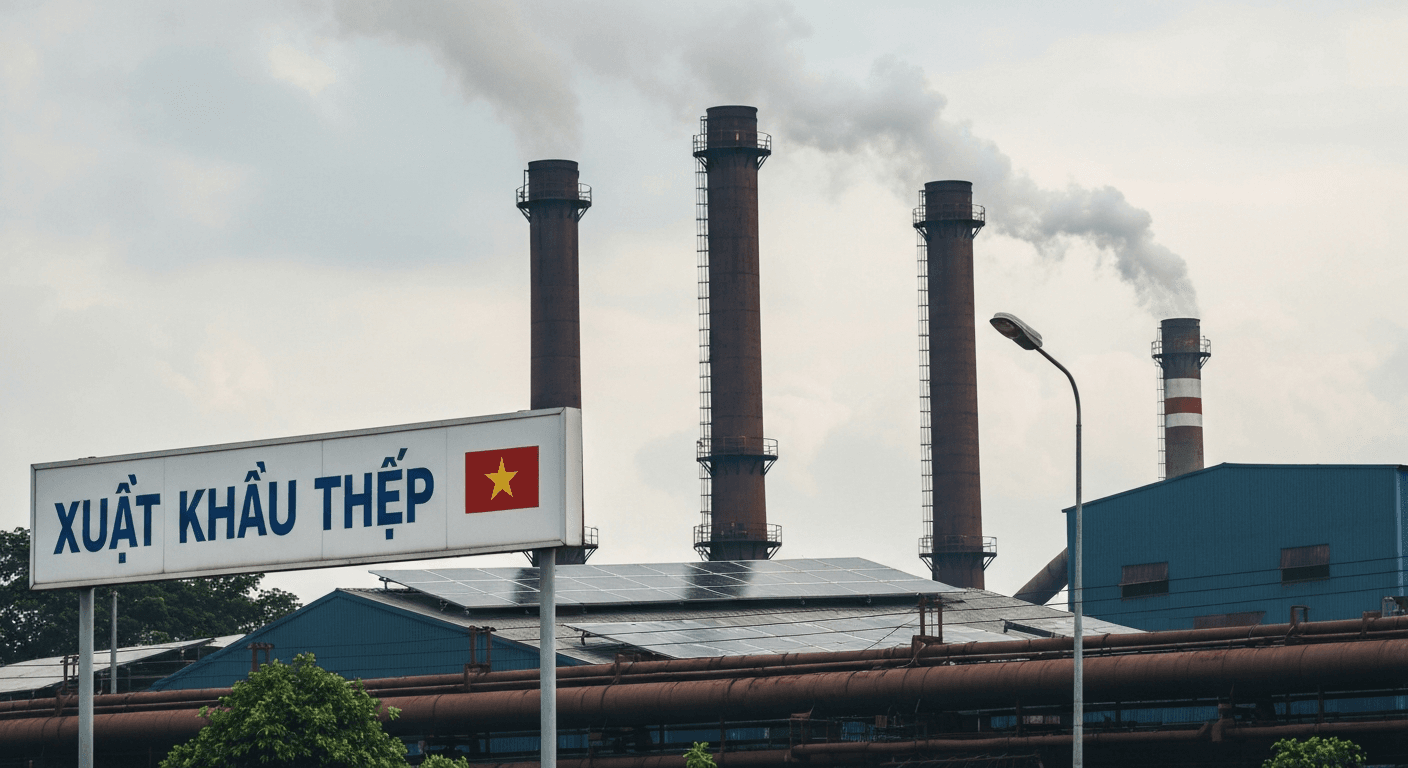
China's new carbon assessment measures impose binding targets on local governments, tightening emissions control and energy transition, which will affect Vietnamese exporters of steel, cement, chemicals, and other energy-intensive goods.
China has unveiled a sweeping new framework to assess local government performance on carbon peaking and neutrality, introducing binding targets that will reshape the operating environment for industries across the country. The measures, jointly issued by the General Office of the Communist Party of China Central Committee and the State Council, establish a dual-control system for both total carbon emissions and intensity, with provincial governments required to draft action plans aligned with national goals. For Vietnamese exporters, this signals tighter supply conditions and potential cost increases in key industrial inputs.
The core targets for the 15th Five-Year Plan period (2026-2030) include reducing carbon intensity by more than 65% from 2005 levels, increasing non-fossil energy share to 25%, and peaking coal and oil consumption by 2030. Provincial governments must set five-year and annual targets, with assessment results rated excellent, qualified, or unqualified. Failure to meet control indicators—such as total carbon emissions, carbon intensity reduction, coal and oil consumption, and non-fossil energy share—will result in an unqualified rating, triggering corrective measures and affecting leadership evaluations.
These measures directly impact Vietnamese exporters of energy-intensive products such as steel (HS 72), cement (HS 2523), chemicals (HS 28-29), and aluminum (HS 76). China is a major supplier of these inputs to Vietnam, and tighter emissions controls will likely raise production costs and reduce output, squeezing margins for Vietnamese manufacturers reliant on Chinese raw materials. Additionally, Vietnam's own exports to China in sectors like textiles and electronics may face increased scrutiny if Chinese buyers demand lower-carbon supply chains to meet their own compliance targets.
The assessment system also includes supporting indicators covering energy efficiency, industry, transport, and carbon emissions trading. This means Chinese industrial parks and provinces will prioritize low-carbon production, potentially accelerating the phase-out of inefficient capacity. Vietnamese firms should monitor which Chinese provinces are rated unqualified, as those regions may face production curbs, affecting supply reliability. For example, Hebei and Jiangsu—major steel-producing provinces—could see output cuts, tightening global steel markets.
To mitigate risks, Vietnamese importers should diversify sourcing away from Chinese provinces with high carbon intensity, explore alternative suppliers in ASEAN or India, and negotiate long-term contracts with carbon compliance clauses. Exporters to China should prepare to provide product carbon footprint data, as Chinese buyers may soon require it. The NDRC will also formulate a carbon peaking action plan for the 15th Five-Year Plan period, which may introduce sector-specific measures. Vietnamese firms should engage with VGEA to track these developments and adjust procurement strategies accordingly.
**Key quotes:**
> "The measures aim to accelerate the establishment of a dual-control system for both the total amount and intensity of carbon emissions." > — General Office of the Communist Party of China Central Committee and the State Council
> "Provincial-level Party committees and governments are required to draft their own carbon peaking action plans during the 15th Five-Year Plan period, setting five-year and annual targets and measures consistent with national objectives." > — Official document
---
Contact VGEA for a detailed briefing on how China's carbon assessment measures affect your supply chain and compliance strategy.